
At just 27, Molly Sellars has already made a name for herself in the fashion world. Her eponymous brand produces outerwear, offering jackets, hats and more. But there is something special about her designs: they are all upcycled, made using materials derived from festival waste.
“I love that a piece of fabric destined for landfill can become a cool, repurposed product,” Sellars says.
Festival waste in the UK is a serious issue, with an estimated 250,000 tents being abandoned at festivals annually. Growing up near Kendal Calling in the Lake District, Sellars went to the event every year. She saw first-hand just how many tents were discarded and left to rot.
“I’d camp all weekend and always see so much waste when I’d leave the festival on the Monday. Seeing this every single year really impacted me and inspired me to do something.”
During her fashion design degree in London, Sellars became more aware of the importance of sustainable materials, with tent and festival waste playing at the back of her mind. When she needed material for a university project as part of her final collection, she didn’t want to produce unnecessary waste. That’s when she realised that she had the perfect muse. Sellars used hundreds of old tents for her project, creating menswear while addressing the issue of festival waste. It was this 2021 project, initially housed in a temporary showroom, which became an innovative brand now recognised by retailers and magazines.
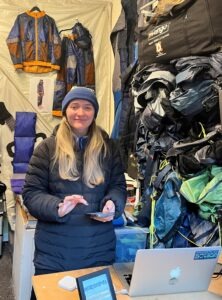
Molly Sellars. Photo by Holly Critchley.
Sellars says: “Tents won’t decompose for thousands of years, they need a secondary purpose. That’s what my brand is all about.”
But her brand isn’t just a hobby, or even just a career.
“It’s problem solving,” explains Sellars, who is based in Appleby-in-Westmorland, Cumbria. “It is both a creative challenge and an environmental mission.”
She reflects on the complexities of turning little pieces of textiles into bold and brilliant products, and says that as well as being fulfilling, it was also a practical choice. “Materials are so expensive, and when I was a student in London it felt even worse. I realised using tents would also seriously help cut costs.”
Making a difference
But it was Sellars’ frustration with the throwaway culture at festivals that really galvinised her to set up her own business. Festival-goers often buy cheap tents for the sole purpose of discarding them after one use, leaving them in the festival campground for someone else to clean up. Sellars sees a second chance at life for this wasted material, and the waterproof nature of tents means that she can turn them into flags, jackets and hats.
Since Sellars launched her company in 2021, she has caught the eye of prestigious publications like Vogue and Hypebeast. Recently, she collaborated with Selfridges, creating flags from abandoned tents and deadstock offcuts (pieces of leftover fabric), which went on display in stores across the country.
Despite the media attention, Sellars is proudest when her work is appreciated by customers.
“The most satisfaction I get is seeing my products being used in day-to-day life. Just seeing that I’ve successfully stopped something that was bound for landfill and instead repurposed it and someone is wearing it. It’s an amazing feeling.”
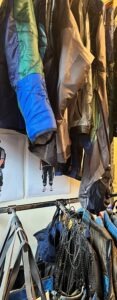
Photo by Holly Critchley
Meanwhile, Sellars has seen her fair share of difficulties as a fashion designer, not least being the face of the brand. “There’s only one of me and so many hours in the day, so to offer the products in large quantities, which larger stockists require, is often a challenge.”
In addition, some manufacturers aren’t keen to work with repurposed materials because it requires a different approach. “They are often far more labour intensive than the average newly made products.” Nevertheless, with the help of two seamstresses, Sellars has been able to expand her output, with retailers like Westmorland Family motorway services stocking her work.
Collaborations like creating an England flag for the 2022 World Cup with ART OF has made her hard work feel worthwhile. And, with the help of her seamstresses, she sometimes goes to festivals, collecting tents, deconstructing them for future products, and, in the process, reshaping how we think about slow fashion.