![[uz],[uz],[uz], The Stanley & Audrey Burton Gallery, Leeds](https://www.northernsoul.me.uk/wp-content/uploads/2025/12/Uz-Uz-Uz-12-1280x640.jpg)
So far as the arts are concerned, the working class are the exception, patronised by low expectations, hardened into the amber-hued, outdated stereotypes of craft and graft. And all the more so as the country narrows its shoulders against the bitter winds of insularity and the middle class mistakes itself for the norm, blind to those for whom the second property shows of daytime television are as callously inflammatory as the courtiers of Versailles.
Borrowing its title from the late Leeds poet Tony Harrison’s uncowed Them & [uz], itself a proud refusal to bow to the yoke of middle class ‘verities’, this exhibition at The Stanley & Audrey Burton Gallery, staged under the unerring eye of curator Laura Claveria, has brought together a broad canvas of works by Yorkshire-based working-class artists, each resistant to being pigeon-holed. In doing so, it opens up doorways beyond the circumscribed horizons of The Guardian’s Saturday magazine, revealing wealth of a different kind, brought into being in the precarity of day jobs and debt, outside the comfort blanket of inheritance.

Jim Brook, Two Lovers (Jimmy Ruffin, Live at Batley Variety Club 1971) 2023. © The Artist. Courtesy of Jim Brook and Guts Gallery. Photo: Eva Herzog Studio.
Of course, the monotony of the unsought workplace inevitably makes its presence felt. Nonetheless, there’s a spark of play in the Recurring Rat Dream II of George Storm Fletcher. The rodents in question cannot help but evoke B.F. Skinner’s subjects, bullied into mindless repetition by intermittent schedules of punishment and reward, no less their bipedal counterparts swiping screens for the dopamine hits of the algorithm. Still, the makeshift nature of the construction and its suggestive title both hold out the hope of boltholes in the imagination, like Billy Liar’s reveries of Ambrosia.
Alongside such ambiguous servings of kitchen sink grimness, there is a generous helping of kitsch and glam, notably the surreal exuberance of Jill McKnight’s disarming sculpture Inner Child, drawn from a childhood snapshot, having entirely lost its head in the translation from one dimension to three.
Conor Rogers’ betting slips triptych, contrastingly, finds its subjects on strip-mined high streets, shuttered and disconsolate. Refusing the tropes of poverty porn, however, he depicts the patrons of boredom and anticipation, waiting for their horse to come in, with empathy, his delicate acrylics rendering his figures with a monastic attention to detail. Rather than colluding with their oppression, he illuminates the dregs of their spirit; his judgement reserved for the millionaire proprietors rather than the customers drawn by the neon of their empty promises.
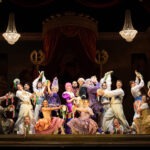
Meanwhile, a sanctifying attention to the everyday lights up Two Lovers (Jimmy Ruffin Live At Batley Variety Clun 1971), Jim Brooks’ stained-glass portrait of his courting grandparents. Framed within the welcoming rectangle of pub signage, the handsome couple appear – if not as saints of the 1970s – like believers at their weekend pilgrimage. There’s another kind of lightness in its touch, suggesting a more down-to-earth worship, more secular songs of praise.
For me however, the piece that hits most close to home, and whose after-effects still play in the imagination, is Bethany Stead’s exquisite ceramic corpse, Pillows For Armholes. Small in scale but large in ambition, on the surface it is a modern-day icon of St. Agatha of Sicily, breasts excised in martyrdom, but its glaze glosses multitudes of contradictory readings. If its exposed abdominal cavities echo those of a Henry Moore sketch included elsewhere in the exhibition, then its existence in space both fleshes out and chafes against the reductionist gaze of the anatomist, even as it bridles against the ascetic strictures of Catholic canonisation. In line with the best of art, it resists – and persists beyond – first impressions.

Jill McKnight, Inner Child 2025. © The Artist. Photo: Joshua Hart.
Occasionally exceptional, [uz],[uz],[uz] insists, in a variety of working-class voices, that, rather than bring shunted to the margins, the artists curated by Claveria deserve instead to be chapter and verse; that they, too, rule.
By Desmond Bullen, Chief Arts Correspondent
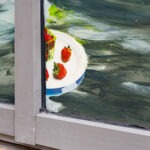
Main image: Beth Smith, Comfort Food, 1990, Pastel on paper © Beth Smith. Cultural Collections and Galleries, University of Leeds Libraries, Art Collection.
[uz],[uz],[uz] is at The Stanley & Audrey Burton Gallery, Leeds until June 6, 2026. For more information, click here.