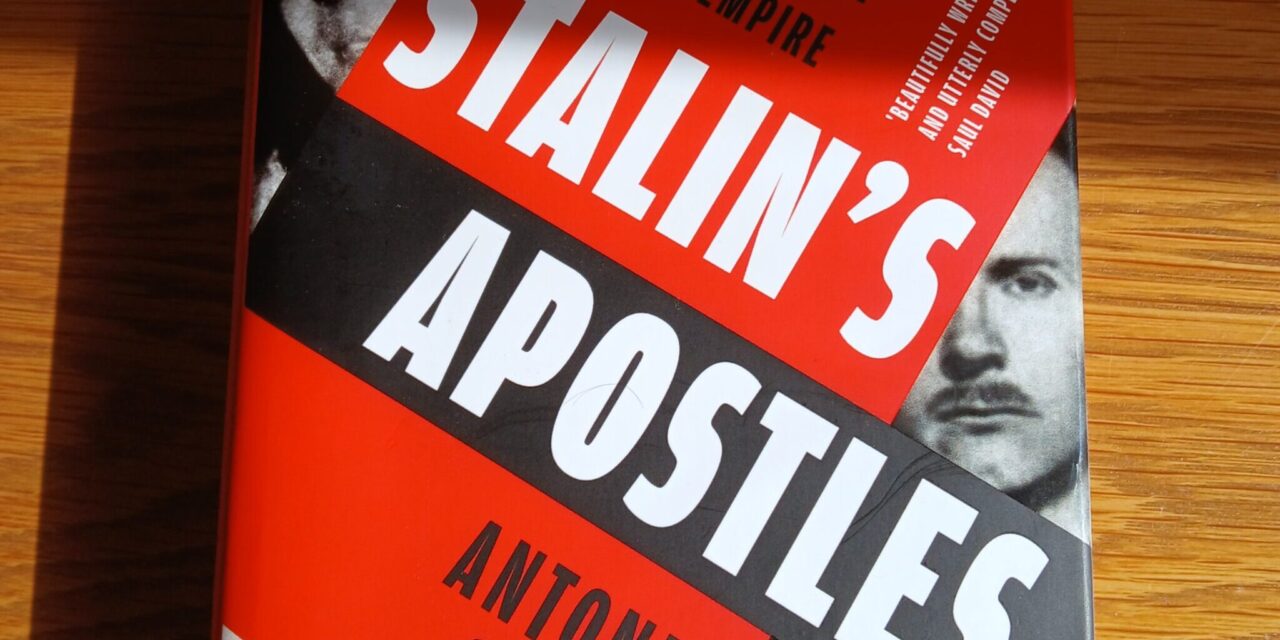
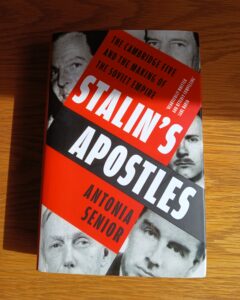
For those interested in history and espionage, Antonia Senior’s highly compelling new book, Stalin’s Apostles, is a fascinating, authoritative and gripping account of the most extraordinary spy ring in history: the Cambridge Five.
In the shadow of the Great Depression in the 1930s, Cambridge University was a hotbed of Marxist discontent. Soviet Communism, the apex predator of the Marxist world, was openly praised and embraced, not just by true believers but also by the many followers of intellectual fashion typically found in Britain’s universities. Into this politically charged microclimate strode four clever Englishmen and one very clever and prickly Scot: Donald Maclean, Guy Burgess, Kim Philby, Anthony Blunt and John Cairncross.
At Cambridge, the Five were open about their communist sympathies, going on demonstrations, taking part in debates, helping to organise strikes, visiting the Soviet Union and, in that great undergraduate tradition, boring rigid anyone who would listen to their fanatical ramblings. Committed, privileged and intelligent, the Five, beginning with Philby, were recruited by agents of the NKVD, the brutal intelligence agency of the Soviet Union and forerunner to the KGB.
An experienced journalist, Senior doesn’t just run through the history. She describes it with genuine narrative flair, a literary ingredient so often lacking in such work. This is how she depicts the most flamboyant of the Five: ‘Being Guy Burgess was a performance: funny, mischievous, shocking.’ And how is Burgess seduced into Marxism? ‘Words, a love of argument and the obscure lexicon of the initiated.’
For the aesthete Blunt, ‘Marxist theory offered a new way to think about art’. Meanwhile, Senior recounts a fascinating anecdote (one of many in the book) of how, on a trip to Hermitage Museum in Leningrad in 1935, Blunt admired the scientific arrangement of the collection where post-revolution paintings were grouped according to the social class of the painter.
Blunt also discovered that, because the Soviet Government had ordered its artists to abandon the fertile fields of avant-garde movements such as Constructivism (so promisingly cultivated in the decade following the Russian Civil War) in favour of the frigid embrace of Socialist Realism, the proletarian art on offer was, to say the least, somewhat disappointing. Yet, he was quick to find excuses for this, and in doing so learned a valuable lesson in revolutionary faith: ‘If the reality fails to fulfil the vision, then the vision, unblemished, just retreats a little further away’.
Treachery
NKVD headquarters, known as the Centre, understood the potential value of the Five. The Centre was busy infiltrating locally recruited agents into the establishment in societies across the globe, not just to gain short-term insight but with the long-term objective of advancing its spies as far up the career ladder as possible. The Five were perfect candidates for infiltration into the British establishment – Cambridge graduates, alumni of the public school system (including Eton), well connected, and either clubbable, eccentric or entertaining.
 On Moscow’s orders, the first order of business was a public recant of their Marxist allegiance and a missive to become born-again members of the ruling class. While being vetted for their new positions in the Foreign Office, the intelligence services and the media, their previous communist peccadillos were dismissed by men with a similar background to the Five as being nothing more than youthful dalliance.
By 1940, Cairncross was private secretary to the Cabinet Minister Lord Hankey, meaning Stalin had access to Britain’s wartime Cabinet minutes as well as comprehensive reports on the organisation of Britain’s intelligence agencies. By the summer of 1941, Cairncross had handed over chapter and verse on the Tube Alloys project, the British programme to construct a nuclear bomb later invaluable to the American Manhattan Project. On being transferred to Bletchley Park, Cairncross promptly betrayed Britain’s most vital wartime secret to the Soviets – that the German Enigma code had been cracked – along with some 5,832 top secret documents over the course of the next three years.
Meanwhile, Philby was busy building himself a splendid reputation, with a stellar career to match in Britain’s Secret Intelligence Service (SIS). He was so successful that, in 1943, the service made him head of a new department dedicated to communist counterespionage. As Senior puts it: ‘The serpent was tending the garden.’
Over at the Foreign Office, Maclean had made first secretary at the British Embassy in Washington meaning he was able to provide the Soviets with such a vast array of top secret documents that they couldn’t read them all. His treachery also put Roosevelt, Churchill and Atlee at a huge disadvantage in the negotiations with Stalin for the post-war period, helping to condemn Eastern Europe to more than four decades of Soviet tyranny.

Antonia Senior. Copyright: Antonia Senior.
Blunt, in his cold-blooded and methodical way, set about gutting the British security service MI5, while Burgess did the same at the BBC, SIS and the Foreign Office. As for the promiscuous and drunk Burgess, he was nevertheless a fantastic networker and successfully used his contacts to gleam secrets from far beyond his own professional jurisdictions. Senior recounts how one of his many lovers, James Pope-Hennessey (Downside School, Balliol and military intelligence), introduced him to Clarissa Churchill, Winston’s niece.
When the Soviets found out they ordered Burgess to marry her. A furiously jealous Pope-Hennessey tried to shoot himself in a lift, only missing because he was so fantastically drunk. Luckily for Clarissa, she swerved that particular bullet and went on to marry the future Prime Minister, Anthony Eden.
Senior is meticulous in her research throughout, drawing on established materials and also on archives in Poland, the Baltic States and Albania, as well as new material released by the UK National Archives in 2020 and 2025. In doing so, she has brought a fresh perspective to the story of the Cambridge Five and thrown the human cost of their treason into sharp relief.
In her account of the rise and fall of the Five, Senior is adept at turning complex material into a clear, accessible, human narrative which successfully holds the reader’s attention to the final page.
She is also unsparing in her description of five deeply flawed, deeply unpleasant men who spent 17 years betraying pretty much every secret possessed by Britain and her closest allies in the service of one of history’s worst mass murderers, Josef Stalin, with disastrous consequences for the West and for the legions of souls they condemned to imprisonment, torture and death behind the Iron Curtain.