Driving into Blackburn in May, the election aftermath still spills from the airwaves, the tremors of the night before continuing to unfold as presenters attempt to narrate a country shifting beneath them. The language suddenly feels old again, full of talk of crowds, resistance, anger and nationhood, while the roads into town pass the very people being discussed in the abstract, unloading vans, waiting at bus stops, moving between shuttered shops and takeaways, reduced once again to demographic, warning sign or voting bloc depending on who is speaking.
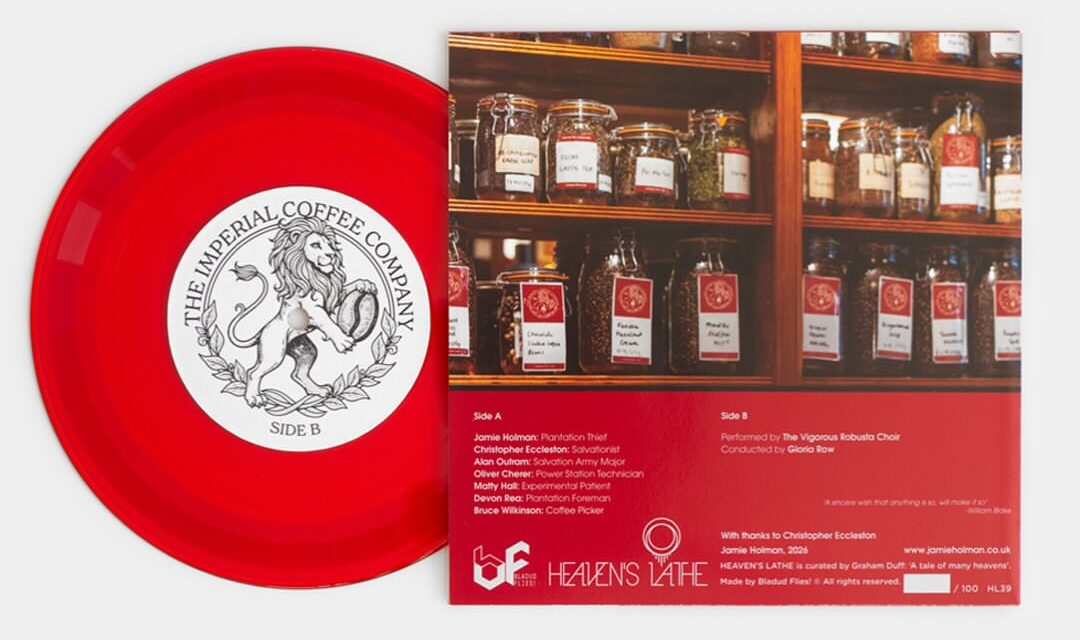
I am heading to interview Jamie Holman about Welcome to The Imperial Coffee Company, his new release through Graham Duff’s Heaven’s Lathe label, a limited edition lathe-cut glass record built from earlier gallery work and collaboration, placing Christopher Eccleston’s voice inside a landscape of guitars, industrial memory and collective resistance. Holman, once singer, guitarist and lyricist with Tompaulin before becoming one of the North’s most distinctive contemporary artists, has spent years moving between painting, installation, sound, performance and questions of working-class culture. The record sits somewhere inside all of them while refusing to settle comfortably into any single category.
By the time I arrive at Holman’s studio, the atmosphere has already settled over the conversation. Inside there is a brew on the table, a worn settee pushed against one wall, records and books stacked unevenly beside large oil paintings leaning against one another. A family portrait places a balaclava-clad figure at its centre, while nearby a goat skull rests awkwardly on a loom-like structure among tools, frames and fragments of ongoing work. Through the windows, Blackburn continues outside almost indifferently, a charity shop worker next door arranging old furniture beneath a fading Verve poster as people drift between takeaways, bus stops and shops further down the street.
There is something familiar in the scene, in Holman himself and in the objects surrounding the studio, although the familiarity carries a slight unease. The goat skull and the balaclava do not feel imported from some strange symbolic world, but rooted directly in this place, part of a culture reflecting upon itself rather than waiting to be defined elsewhere. The atmosphere is conscious, self-aware and quietly assertive, resisting the softened nostalgia that so often shapes discussions of class and northern identity.
Lucky Man
Welcome to The Imperial Coffee Company sits somewhere between artefact, pop record and gallery intervention. Pressed as just 100 copies, it deliberately pushes against gallery exclusivity, moving instead towards ownership, circulation and the everyday ways that culture travels.
“I just wanted to make it into a pop record,” Holman tells me.
Not an abstract sound artwork awkwardly repackaged as music, nor a gallery piece reluctantly translated into another form, but something that could sit inside traditions that informed him: independent music culture, records bought in shops, collected, lived with and played.
Credit: Devon Rea
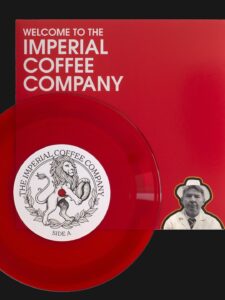
That impulse runs directly through the object itself. The title, red sleeve and contributor credits pull explicitly from Lindsay Anderson’s O Lucky Man!, a film Holman repeatedly returns to during our conversation. Mick Travis selling coffee through a grim 1970s England becomes part of the release’s conceptual DNA alongside Alan Price’s soundtrack and Anderson’s uneasy relationship with ambition, labour and English identity.
Holman laughs that some viewers simply ask why he appears to be “selling pork pies” in accompanying imagery while others immediately recognise the references. Both responses matter, the bathos cuts as keenly as any butcher’s blade and Holman appreciates that.
The record itself moves similarly between accessibility and complexity. Eccleston’s narration sits inside dense guitar textures drifting towards hypnotic territory and carrying echoes of Spacemen 3 without collapsing into imitation, while industrial violence, resistance, unrest and social fracture arrive not as historical curiosity but as continuity.
Listening later, the election language from the journey into Blackburn begins folding back into the work itself. The voices on the radio that morning suddenly seem less separate from Eccleston’s narration than extensions of it, another cycle of anger, fracture and belonging unfolding through familiar language. There is no pop record yet for this soundscape, at least not fully, but Welcome to The Imperial Coffee Company comes close.
The complexity of class
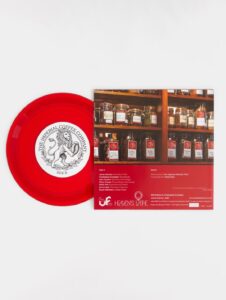
The B-side shifts sharply. The same material returns transformed through collective voice and choral form. Holman speaks of wanting to move from “the singular talking about the mass to the mass talking about the mass”, using the language of records itself not simply as format but structure. That tension quietly runs through the wider conversation. Holman repeatedly speaks in terms of “we” before correcting himself back towards “I”, a small shift revealing a larger contradiction sitting beneath contemporary cultural production, where collective cultures emerge through communities, clubs, terraces and shared histories while recognition still often arrives through named figures, institutions and individual careers.
Homan identifies this tension as dangerous and exclusionary: “The depiction or discussion around class and classness has become something that excludes a huge portion of people who absolutely would not call themselves anything other than working class”. It is here that Holman moves from any notion of representational art to critical reflections on what is not a lack of representation, but a warped and manipulated representation of a nostalgic concern with working-class life.
“Class is complex and can’t be reduced to…paintings of Greggs packets, for instance, as a way of talking about class.”
Credit: Devon Rea
Holman repeatedly returns to a frustration that contemporary discussions of class can become branding exercise or aesthetic shorthand, flattening complexity into recognisable symbols detached from the communities that generated them. The “Greggs bag” repeatedly returns during our conversation as shorthand for that reduction, not criticism of particular artists but resistance to working-class culture becoming nostalgic image-making or institutional category rather than lived, contradictory experience.
Class, for Holman, remains rooted in movement, circulation and ownership. Football becomes one example. Fashion another. Music another still. Working-class spaces generate forms powerful enough to reshape wider culture before slowly returning transformed into nostalgia, archive or commodity.
Duff and Holman collaborated previously through gallery and theatre work before Welcome to The Imperial Coffee Company emerged, including work connected to Duff’s touring stage adaptation of Ideal, where Holman’s paintings appeared inside Moz’s flat during the production. Recalling the experience, Holman laughs: “My work was at the Lowry, but it was not in the Lowry. It was in the stage set of people acting out working classness in the Lowry.”
The line lands somewhere between joke, satisfaction and critique. The work had entered the institution, although not through formal gallery invitation or curatorial validation, arriving instead through collaboration, theatre and popular culture while remaining front and centre within the production itself. The same tensions quietly sit beneath Welcome to the Imperial Coffee Company, which never entirely resolves its contradictions around ownership, institutions, visibility and cultural legitimacy.
Leaving Blackburn later that afternoon, the voices on the radio no longer felt entirely separate from the record itself. Outside the studio, the arguments, anxieties and fault lines continued unfolding in familiar language, the world carrying on where Eccleston left off. If Welcome to The Imperial Coffee Company resists anything, it is the temptation to soften class through distance or nostalgia. Holman’s record asks for something more difficult than that. Not simply remembrance. Recognition.
Main image: credit Devon Rea
For for more information about Welcome to The Imperial Coffee Company, click here.