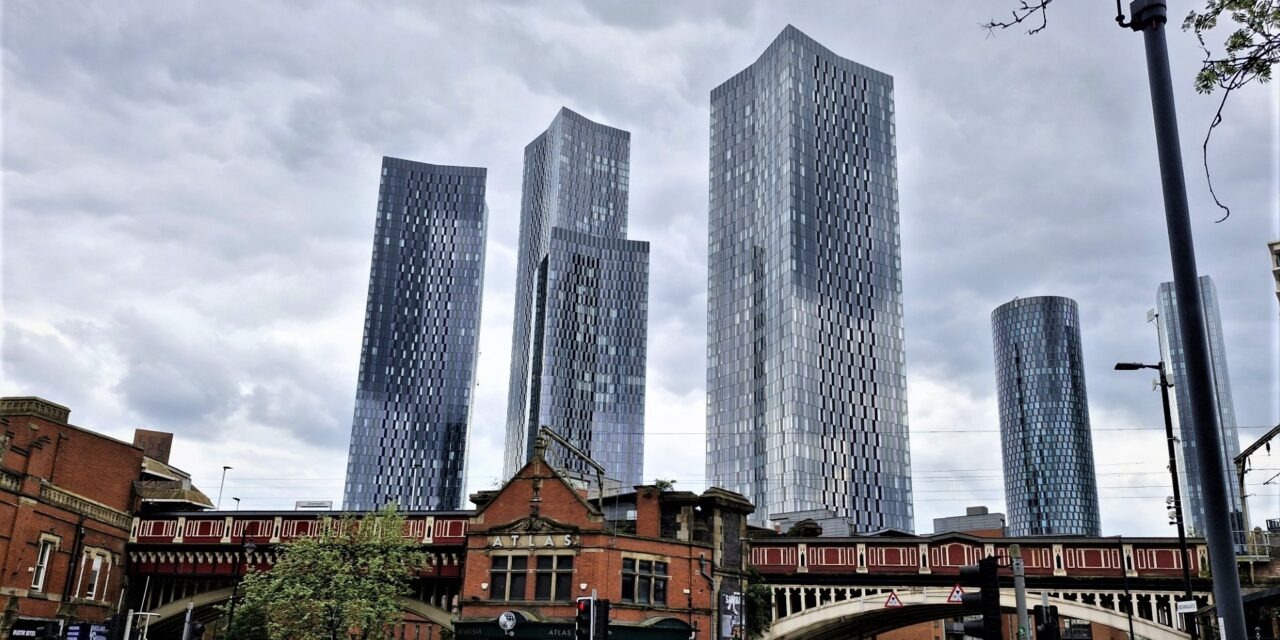
Manchester loves to tell its cultural story through the people who created things with their own hands.
Factory Records, the Haçienda, and the city’s countless independent venues have helped to create a mythology in which culture is born not only within established institutions, but also thanks to people who decide that Manchester is missing something — and then bring that idea to life. However, the city was building its own musical infrastructure long before anyone had plugged in an electric guitar.
One remarkable example is The Gentlemen’s Concerts in Manchester. The history of this society can be traced back to 1749, although some accounts link its origins to gatherings of amateur flute players who were playing around 1770. Nevertheless, what began as a world of amateur music-making evolved into one of Manchester’s most important musical institutions.
Making music
The Gentlemen’s Concerts wasn’t just a group that met from time to time to play for pleasure. The organisation ran a regular concert season and formed an orchestra, bringing together amateur and professional musicians. Over time, it became a fully professional ensemble.
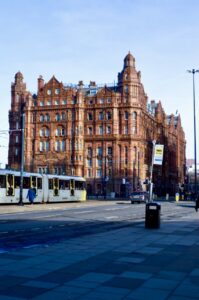
Midland Hotel. Photo by James Richardson.
The society even established its own infrastructure. After spending more than half a century in its hall on Fountain Street, in 1831 it moved to a new concert hall on the corner of Peter Street and Lower Mosley Street. This site was subsequently incorporated into the plans for the construction of the Midland Hotel, meaning that a visitor strolling through this part of Manchester today is walking through places linked to the history of a largely forgotten musical city.
Then Charles Hallé came along.
Driven out of Paris by the 1848 revolution, the German-born pianist settled in Manchester and soon became deeply involved in its musical life. By the end of 1849, he was already conducting the Gentlemen’s Concerts. Hallé subsequently established a permanent orchestra bearing his name, but he wasn’t in a musical vacuum. Manchester already had musicians, season ticket holders, an audience, and connections capable of sustaining an ambitious concert life.
The Manchester Gentlemen’s Concerts were hardly ‘DIY’ in the modern egalitarian sense. The culture of season tickets could be socially exclusive, and access to these networks depended largely on social class and connections. But there is something recognisably Manchester about what they were doing: finding musicians, building an audience, and creating the institutions they needed.
Technology changes. The people to whom doors are opened change. The music certainly changes. However, cultural scenes still depend on people willing to create them. Looking back, Manchester’s celebrated ‘DIY’ tradition enjoys a much longer history than Factory Records. Long before the record label, the nightclub or the fanzine came into being, there were subscribers assembling musicians, hiring rooms and building audiences. The equipment was different. But the Manchester instinct was already there.