Two new public artworks in Ashton-in-Makerfield prompt Peter Shukie and his dad to look again at their home town, its shared pleasures, and the lives that brought them here.
Walking around Ashton-in-Makerfield with Dad has become something of a Sunday tradition, but not for shopping, drinking or even exercising. These strolls in Wigan are more of a weekly remembering, his 90 years measured not in decades but in tiny changes – a newly painted shop front, a gathering of wind-blown litter.
The town centre disruption of the last 12 months has brought slowly emerging new pavements, a repurposed market square, and become so major as to be barely worth mentioning. Just roadworks, traffic, bollards and diversions, all acting as backdrops to our wandering.
It was on one of these Sundays that something appeared and hummed like a guitar kerrang through this Sunday serenity, a warping of the air around the silent chaos of a building site at rest. The regeneration has brought public art to the town, and what an impact it has made. Two murals at either end of the old market square have people stopping and talking. Men and women tell us they cannot remember there being art in Ashton before now.
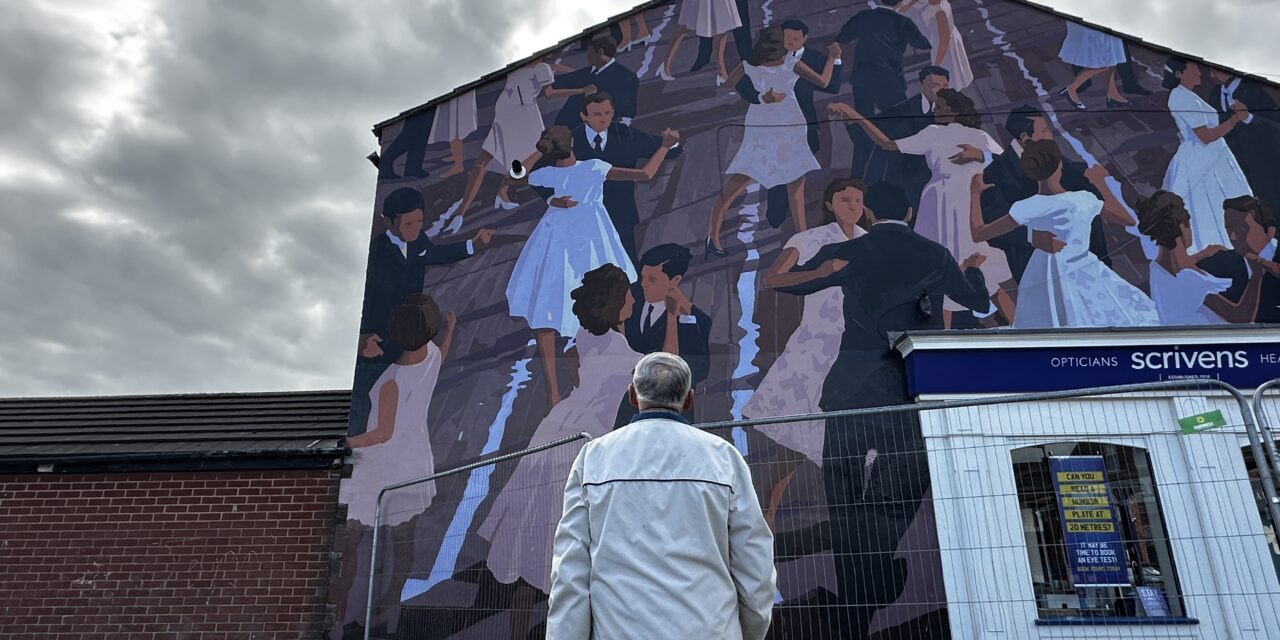
Beside the gas pipe excavation, dancers move across a gable end. Dad wonders aloud whether the works have dug up the lost ones and set them dancing again in the Ashton air.
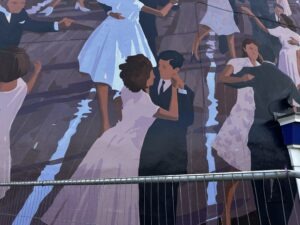
Ancestors. Photo by Peter Shukie.
Gavin Renshaw’s Ancestors recalls the Baths Hall, where my parents met. Researching at Leigh Archives and listening to residents at the Brian Boru, Renshaw found dancing woven through memories of the town, often with stories of meeting future partners. Mining subsidence had drained Ashton Baths of water and purpose until a suspended wooden floor gave the building another life, a dance hall that held 1,000 people.
Renshaw’s depiction is wonderful, the muralled dancers seem to sway with collective grace. A discarded shoe suggests tired feet and another tune too good to miss. Looking at them, I remember a white silk scarf Grandma kept boxed in tissue paper for decades after Grandad’s death. He had worked months of overtime down the pit to buy it. I remember its smoothness. She remembered a smooth dancer, a different creature on Saturday nights. In those tiny terraced houses, keeping coal dust at bay meant constant cleaning. The dazzling white of his scarf belonged to the transformation of a night out, a little Hollywood glamour made real by a town coming together on a sprung dancefloor. Renshaw’s dancers carry that pleasure of escape from hard-working lives, glitter replacing coal dust for a few hours.
Dad finds another dance floor in Carrie Reichardt’s ceramic mural, Forged Together, remembering Wigan Casino before its Northern Soul fame. Six hours dancing, then six miles walking home. I think of how their dances led to our dances, through the people they met and the lives that followed.
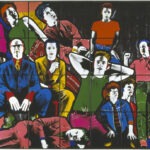
Reichardt’s work is a ceramic mosaic of photographs and messages pressed into clay. Among the images, I find myself in a school photograph from Communion Day. Around us are club outings, teams and parades, other acts of communion through which the town made its life together.
“There’s a really deliberate act on my behalf to try and make it so it has a point of reference to as many people as possible,” Reichardt says. “Whether it’s the factory, whether it’s the swimming pool, whether it’s the dancing, whether it’s the parade.”
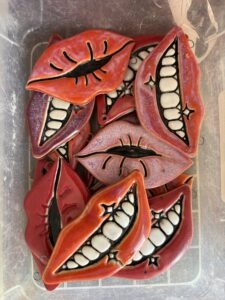
Photo courtesy of Carrie Reichardt
Working with curator Tasha Whittle, Reichardt combined archival images with more than 650 ceramics handcrafted by residents, with Everyday Wigan hosting further workshops. She speaks warmly of the willingness to contribute, particularly among older people. “There’s that real humbleness.”
People have offered their own marks and messages to something shared. Those contributions also make room for anger and demands. Alongside the historical photographs of eviction, mining disasters and strikes, one ceramic insists that working-class people deserve nice things.
“That’s the beauty of using people’s ceramics, because the people will say what they want to say, we don’t have to,” says Reichardt.
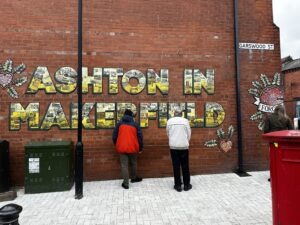
Photo by Peter Shukie
This summer’s by-election brought other eyes to Ashton, seeking what the town might tell the country about itself. The artworks have us looking again too, although on our Sunday walk their effect feels more profound. Dad’s memories become part of conversations with people who have stopped beside us, each bringing something of the town into view.
“Once it’s on a street, people feel like they can have a conversation about it,” Reichardt says. “That breaks down that initial barrier.”
In a town with a history of hingemaking, these works offer a pivot between past and present. The remembering draws people together around places where earlier generations gathered, finding pleasure and escape in lives that gave them too little of either. Dancing allowed the world to right itself temporarily, and the connections made on those floors outlasted the evening.
Now, beside a square still being remade, the vitality of fresh art gives us another reason to linger together. The sounds these artworks revive bring an echo across a now silent marketplace, not of nostalgia but of remembering.
Those dancers were not dug up from the gas pipe trench. We recognise them because the life they made together helped make ours. And that takes some finding.
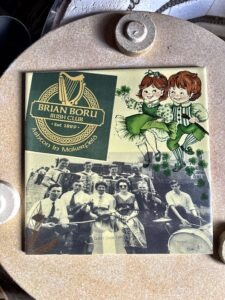
Brian Boru tile. Photo courtesy of Carrie Reichardt.
Main image: Dad and Ancestors, photo by Peter Shukie